7 Ways Moving Companies Lose Money Without Noticing
Most moving companies lose money in small, quiet ways that never show up as a crisis. Here are seven of the most common leaks, and how to close them.
Most moving companies don't lose money in big, obvious ways.
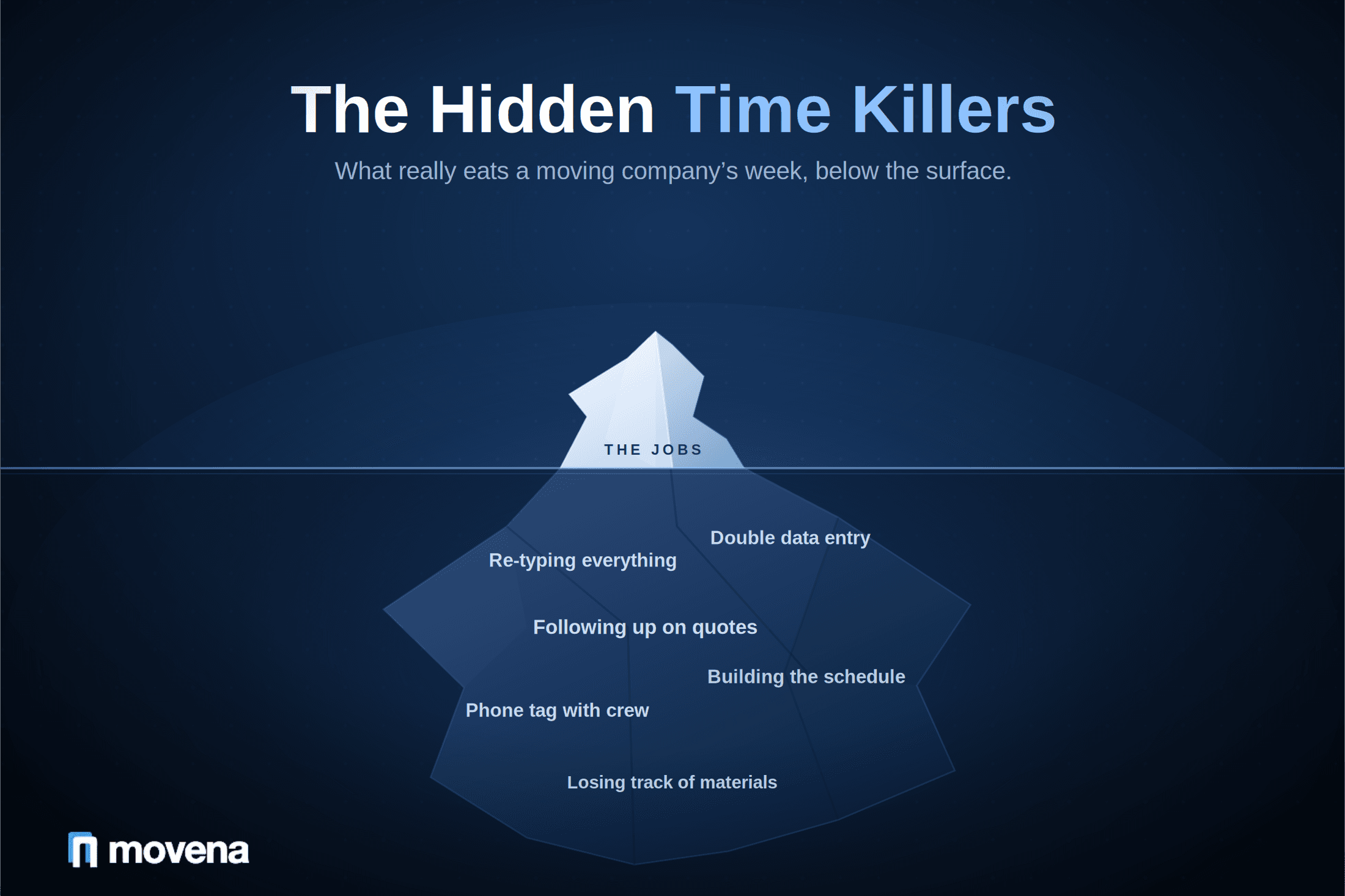
They lose it in small ones. A little here, a little there. Nothing that ever shows up as a crisis. Nothing that makes you stop and look. It just quietly adds up, month after month, until the year is worse than it should have been and nobody can point to why.
The hard part is that none of these leaks feel like problems in the moment. You're busy. The work is coming in. The trucks are rolling. It feels like everything is fine. But "fine" is exactly where the money hides.
Here are seven of the most common ways it slips out, and what closing each one actually looks like.
1. Quotes that are a little too low
Most quotes aren't wildly wrong. They're slightly wrong. Off by ten or fifteen percent, just enough that the job is still profitable but less than it should be.
It happens because quoting is usually done fast, from memory or a rough gut feel. The volume gets underestimated. The stairs get forgotten. The drive time is optimistic. Each one costs a small amount, and because the job still makes money, nobody flags it.
But a small miss on every quote, across every job, across a year, is a serious number. The fix isn't quoting slower. It's quoting from real data, so the price reflects what the job actually costs you, every time.
2. Leads that never get a callback
A lead comes in. It gets written on a notepad, or it sits in an inbox, or someone means to call back after lunch and then the day runs away from them.
By the time anyone follows up, the customer has already booked someone else. The lead wasn't bad. The follow-up just never happened.
This is one of the most expensive leaks of all, because you already paid to get that lead. The marketing worked. The phone rang. And then nothing. Every lead that goes cold is money spent to generate a customer you then let walk away.
3. Gear that disappears
Blankets left at a customer's house. Boxes that go out and never come back. Dollies that are out on another job that hasn't returned yet.
No single missing item feels like much. But moving companies replace this equipment constantly, and most have no idea how much they spend doing it, because it never shows up as one big cost. It shows up as a small order here, a small order there, all year long.
When you can see what you own and where it is, you stop buying things you already have. That alone closes a leak most owners never knew was open.
4. Double-booked days
Two jobs land on the same Saturday. Nobody catches it until the morning of, and now you're scrambling for a crew, turning down work, or sending a team that's stretched too thin to do a good job.
Double-bookings cost money twice. Once in the chaos of fixing them, and once in the reputation damage when a job goes badly because you were short-handed.
It almost always comes down to a calendar that lives in one person's head, or a spreadsheet that two people edited at once. A shared, single source of truth for the schedule makes it nearly impossible.
5. Crews that start the day late
A crew shows up at 7am ready to load. The paperwork isn't ready. The address is wrong. The gear is missing. So the morning starts with waiting instead of working, and a four-hour job takes five.
You still pay the crew for that lost hour. You just don't get anything for it. And it happens far more often than most owners realize, because it never gets logged anywhere. It just feels like a slow morning.
Every job that starts clean, with the right information and the right gear loaded the night before, is a job that costs you less to complete.
6. Invoices that go out late, or not at all
The job is done. The crew has moved on to the next one. And the invoice sits there, waiting for someone to get around to it.
Late invoices get paid late, which hurts your cash flow. But worse are the invoices that slip through entirely. A job gets completed, everyone moves on, and three months later nobody remembers whether that customer ever actually paid.
Work you did and never billed for is the purest form of lost money there is. The closer invoicing sits to the job itself, the less of it disappears.
7. No idea which jobs actually make money
This is the leak underneath all the others. Most moving companies know their total revenue. Very few know which jobs, which routes, which customers, and which crews are actually profitable.
So they keep taking the jobs that lose money, because they look like revenue. They keep serving the customers who cost more than they pay. They can't fix what they can't see.
The companies that pull ahead aren't the ones working the hardest. They're the ones who can look at the numbers and know exactly where the money is made and where it's lost.
The pattern
Read back through these and you'll notice something. None of them are about working harder. None of them are about doing something wrong.
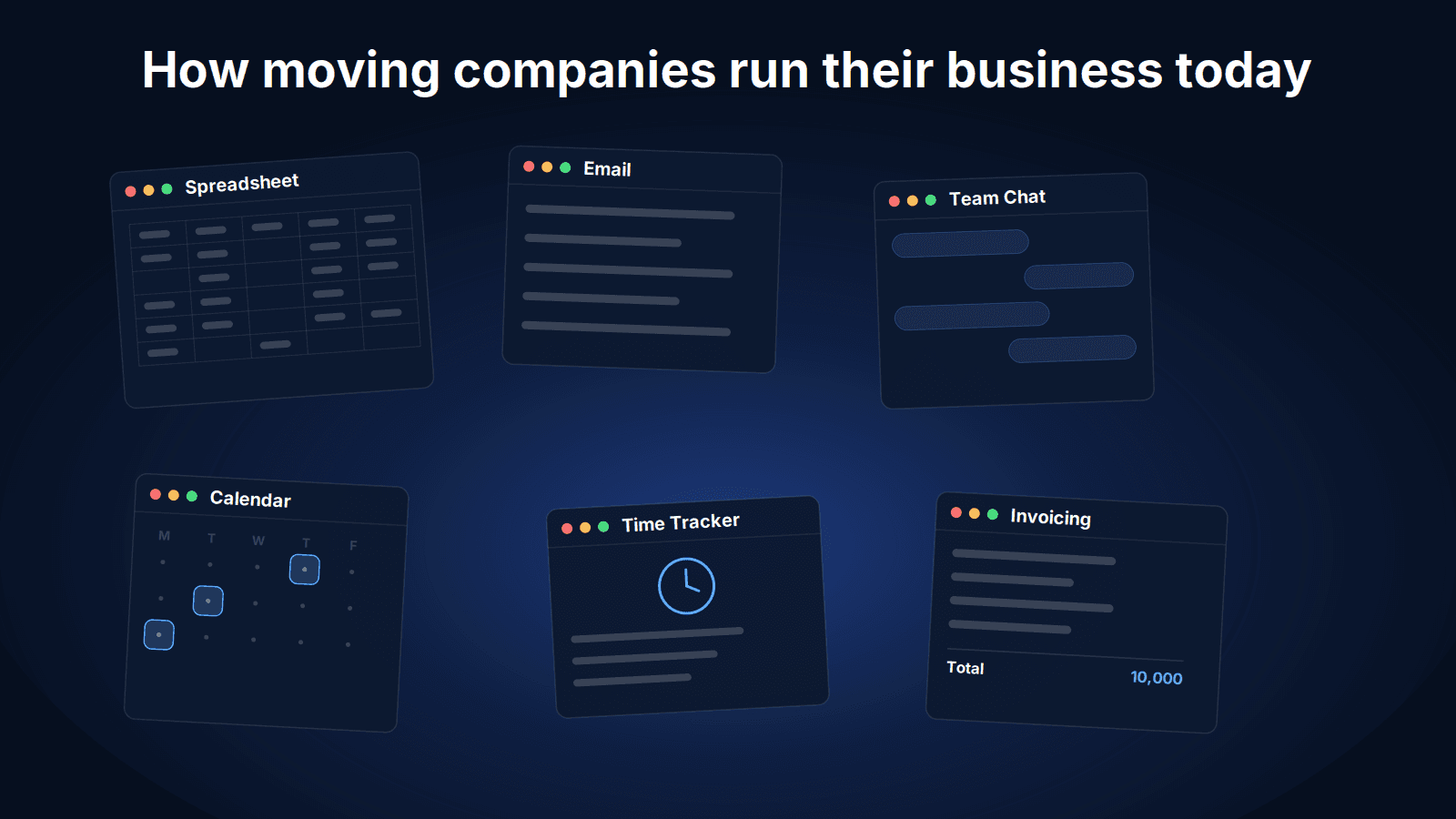
They're all about visibility. Every leak on this list comes from the same root cause: information that lives in too many places, or in nobody's hands at all. The quote that wasn't based on real data. The lead that wasn't tracked. The gear nobody could see. The day nobody coordinated.
When everything a move touches lives in one place, from the first lead to the final invoice, these leaks don't get fixed one by one. They just stop happening, because the gaps they slipped through are gone.
That's the whole idea behind Movena. Not to make you work harder. To make sure the work you're already doing isn't quietly costing you more than it should.
Setting a new standard for how moving companies operate.